

Choosing between an inventory loan vs invoice financing starts with identifying what is tying up cash: materials and finished goods, or completed work that customers have not paid for yet. For manufacturers, the better fit depends on the timing of the need, the assets available and the terms attached to funding.
Talk with Now about your invoice cash-flow needs
What is the difference between an inventory loan and invoice financing?
An inventory loan provides funding secured by some or all of a company’s inventory. The lender evaluates the goods and the company’s ability to repay. Depending on the arrangement, the lender may set rules for eligible inventory, borrowing limits, inspections or reporting. The business generally owes repayment under the loan agreement whether or not it sells the inventory as quickly as expected.
Invoice financing uses eligible accounts receivable: invoices for goods or services already delivered to business customers. A provider advances funds against those receivables, then the advance is settled when the customer pays, with fees and other terms determined by the agreement. The structure can vary. Some arrangements are loans secured by receivables; others involve the purchase or assignment of invoices.
These are not interchangeable products. An inventory loan can help pay for the next production run before goods are sold. Invoice financing can help bridge the period after delivery while a customer pays on agreed terms. A manufacturer with both kinds of cash gaps may evaluate both, but should compare the full cost and obligations rather than the product label alone.
For a general overview of small-business funding resources, manufacturers can also consult the U.S. Small Business Administration. Any financing decision should be based on the specific contract and the company’s financial advice, not on a general description.
Which cash-flow gap are you trying to cover?
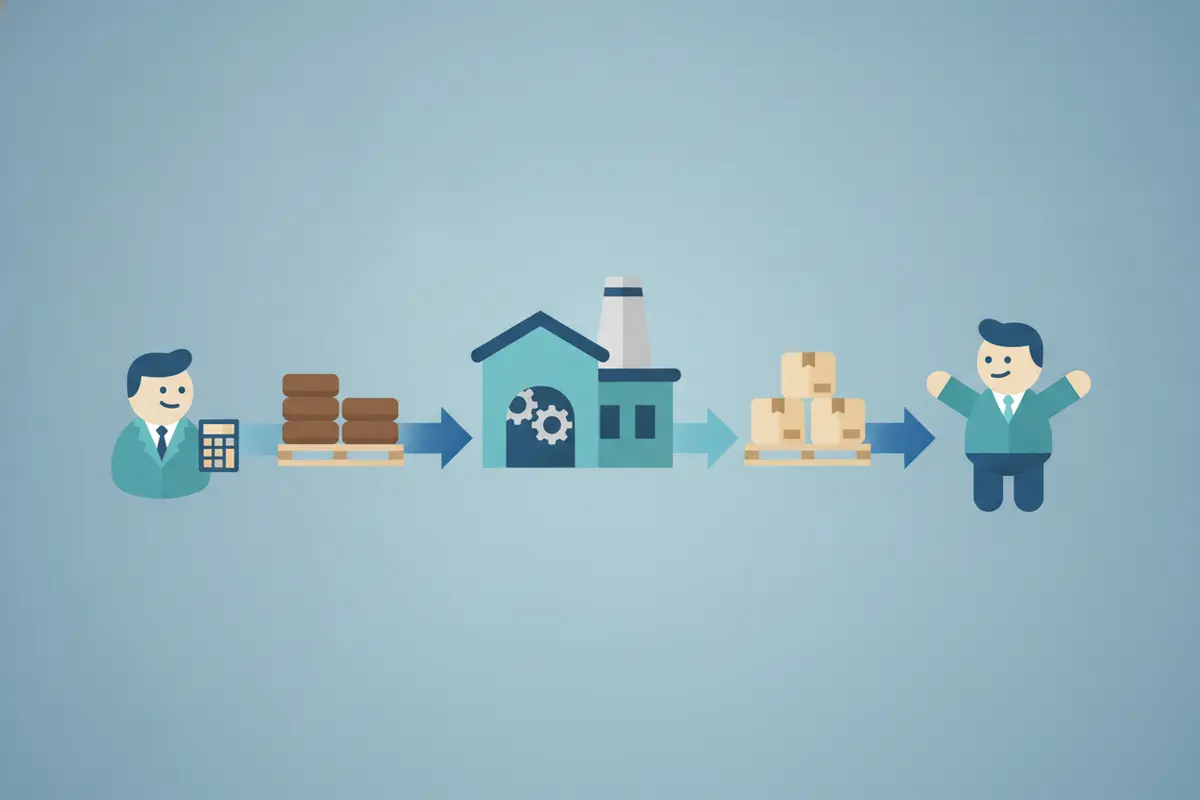
Start with the point in the operating cycle where cash is needed. Mapping the path from purchasing inputs through customer payment makes the choice more concrete.
- Before production: If you need to buy raw materials, components or packaging before you can fulfill an order, inventory-based borrowing may match the use of funds. Check whether the goods you plan to purchase qualify as collateral and whether the lender’s advance is available early enough.
- During production: If payroll, freight or other operating costs come due while materials are being turned into a finished product, a facility tied to inventory may not cover every cost. Review what the agreement allows you to fund and whether cash arrives on the schedule you need.
- After delivery: If you have completed and invoiced a creditworthy business customer but the invoice is due in 30, 60 or 90 days, invoice financing may align more closely with the receivable that will convert to cash.
- Across multiple stages: Seasonal orders or longer production cycles can create overlapping needs. Estimate the timing and size of each gap separately before deciding whether one facility can meet it or whether separate tools would add complexity.
For example, a manufacturer that must purchase steel weeks before production may have a different need from one that has shipped a completed order and is waiting for a buyer’s net-60 payment. The first should examine how inventory is valued and controlled under a loan. The second should examine invoice eligibility, customer payment terms and how the financing is settled.
How do the two options compare?
Use the table as a starting point, not as a substitute for a term sheet. Availability, pricing and legal structure vary by provider and borrower.
| Factor | Inventory loan | Invoice financing |
|---|---|---|
| Underlying asset | Eligible raw materials, work in process or finished goods, as defined by the agreement. | Eligible customer invoices or accounts receivable. |
| Typical cash-flow point | Often considered before sale, when a business needs funds to buy or hold stock. | After goods or services are delivered and an invoice is issued. |
| What affects availability | Inventory type, condition, valuation, turnover and lender controls may matter. | Invoice documentation, customer credit, payment terms and eligibility rules may matter. |
| Repayment or settlement | Review the repayment schedule, collateral terms and what happens if stock sells slowly. | Review how proceeds are collected or remitted, fees and what happens if a customer pays late or disputes an invoice. |
| Potential fit | A known inventory purchase or stock-related need, if projected sales and margins support repayment. | A gap between delivery and customer payment, if the receivable qualifies and the cost fits the margin. |
| Costs to compare | Interest or fees, origination charges, collateral expenses and any unused-line costs. | Discount or transaction fees, time-based charges, setup costs and any fees tied to late payment. |
What should manufacturers check before choosing?
Two offers with similar headline rates may produce different cash proceeds, restrictions and total costs. Ask for the terms in writing and evaluate them against the order or receivable the funding is meant to support.
- Eligible assets: For an inventory loan, clarify how work in process, perishable or custom goods are treated. For invoice financing, ask which customers, invoice types and payment terms qualify.
- Advance and timing: Confirm the amount available after reserves or deductions and when cleared funds can be used. A funding source that arrives after a supplier deadline may not solve the problem.
- Total cost: Calculate fees over the likely time the funds are outstanding. Include setup and servicing charges, minimums, extensions and late-payment provisions. Do not compare a monthly rate with a one-time fee without converting them to the same scenario.
- Obligations and recourse: Understand the repayment promise, collateral rights and what the business may owe if a buyer fails to pay, an invoice is disputed or inventory loses value. Ask a qualified adviser to review unfamiliar language.
- Control and administration: Look for audits, inventory reporting, account-control requirements, customer notices and collection procedures. Consider how each process will work with your accounting and operations teams.
- Flexibility: Check whether you must finance all eligible stock or invoices, meet minimum usage requirements or commit for a fixed term. Match the commitment to the variability of your orders.
- Effect on other financing: A lien or assignment may affect existing bank facilities or future borrowing. Ask current lenders and prospective providers how the arrangements interact.
When comparing a loan, also consider whether repayment is due on a fixed calendar regardless of customer receipts. With a receivables-based arrangement, clarify how long the invoice can remain unpaid before additional costs or steps apply. A company should not assume that “invoice financing” always means the same legal structure or transfers the same risks.
What information should you prepare for a financing review?
Clear operating records help a manufacturer explain the need and make an offer easier to evaluate. Organize information around the asset and the cash-flow cycle, not just the amount requested.
- For inventory: Prepare a current inventory report by category, location and age, with a clear distinction between raw materials, work in process and finished goods. Note any custom or perishable stock and whether goods are already pledged.
- For receivables: Have an accounts-receivable aging report, copies of representative invoices and the customer contracts or purchase orders that support them. Flag disputes, credits, deductions or unusual acceptance steps.
- For the order: Show the production schedule, supplier obligations, expected shipment and delivery dates, and the customer’s payment terms. This helps connect the funding request to a specific business cycle.
- For cash planning: Prepare a short-term cash forecast that includes payroll, suppliers, existing debt service and expected collections. Include a downside case for a shipment or payment delay.
- For existing facilities: Gather loan agreements and lien information so the provider can assess whether collateral overlaps with another lender’s rights.
Do not assume that providing records guarantees approval or a particular advance. Each provider applies its own eligibility criteria, and the signed agreement determines the actual obligations. If forecasts include uncertain orders or customer payments, label assumptions clearly instead of presenting them as completed sales.
How can you estimate whether the cost makes sense?
Build a simple cash-flow comparison for the specific order or invoice. Estimate the cost of funding, the date cash is needed and the date the business expects to receive customer payment. Then compare the funding cost with the contribution margin and the business impact of taking or fulfilling the order.
- Identify the amount and duration. Estimate how much cash is tied up and for how long. For inventory, include the expected time to purchase, produce and sell. For an invoice, use the customer’s agreed terms and a realistic payment history.
- List every charge. Include stated rates, fixed fees, renewals, reserve deductions and costs triggered by slower-than-expected sales or payment.
- Calculate usable proceeds. The advance amount is not always the same as cash available after fees, reserves or required paydowns.
- Test a downside case. Model a delayed shipment, a customer dispute, slower inventory turnover or a late payment. See whether the company can still meet payroll, suppliers and any scheduled debt service.
- Compare alternatives consistently. Put each offer over the same dollar amount and time period. Include the operational cost of reporting, restrictions and managing a separate facility.
For instance, a $100,000 invoice with net-60 terms should be compared using the expected funding period and the complete fee schedule, not just an advertised starting percentage. A $100,000 inventory purchase should be assessed against the time to sell the goods, carrying costs and repayment requirements. These examples describe the method, not a quote or an estimate of a particular provider’s terms.
Use the order forecast to test the decision
Put the production schedule, supplier due dates, customer delivery date and expected collection date on one timeline. Add the cash outflows needed at each stage, including labor, freight and any deposits. Then mark when proceeds from the order are realistically expected to arrive. This shows whether the pressure comes before an invoice can be issued or after delivery while the customer pays.
Run at least two versions of the forecast. In the base case, use the expected production and payment dates. In a downside case, extend the production cycle or customer payment period and test whether the company can still meet payroll, vendor commitments and repayments. If the funding only works when every milestone happens on time, the business may need a smaller order, different customer terms or a larger liquidity buffer in addition to financing.
Finally, check the economics of the transaction itself. Compare the order’s expected margin after production and financing costs with the operational benefits of fulfilling it. Financing can help align cash timing, but it does not make an unprofitable order profitable. The estimate should inform a decision, not replace a review of the signed terms and the company’s full cash forecast.
Now’s Revenue On Demand is designed for approved B2B invoices, rather than inventory purchases. It allows a business to choose which eligible invoices to activate, with a flat fee based on the invoice payment terms; current pricing details are available on the Now pricing page. This is done through Revenue On Demand, which allows you to receive your revenue hassle-free for a simple, flat fee. For product details, review how Revenue On Demand works.
How does invoice financing affect customer relationships?
Manufacturers should ask how their customers will experience the arrangement. In some financing structures, a provider may take over billing or collections. In others, the business remains the biller of record and the customer receives updated remittance details. The distinction can matter for accounts payable processes and established relationships.
With Now’s Revenue On Demand, customers know Now is involved, the business remains the biller of record, terms stay the same and only remittance details are updated. Its model is hybrid non-recourse: customer-pay insolvency or bankruptcy risk is covered, while the client remains liable for fraudulent invoices or agreement breaches. Review the agreement for exact requirements and exclusions. More answers are available in the Now FAQ.
For either type of funding, tell your finance and operations teams who will send invoices, reconcile payments and respond to deductions or disputes. Document the process before the first funded transaction. That small step can prevent confusion about which account to pay or how a short payment should be handled.

How do order patterns change the decision?
Manufacturers rarely have one identical cash cycle all year. A large seasonal order may require materials and labor well before customer payment, while routine replenishment may turn into receivables quickly. Separate recurring needs from one-time spikes. A facility designed around a temporary peak can be costly or restrictive if it remains in place after the order ships.
Also examine the quality and timing of customer commitments. A signed purchase order can inform a production forecast, but it is not the same as a delivered order and accepted invoice. If the buyer has inspection, certification or acceptance requirements, payment may not start when the goods leave the factory. Map those milestones before estimating how long an invoice-based advance would be outstanding.
On the inventory side, assess whether goods can be sold to another buyer if the original order changes. Standard components may have a wider resale market than custom-built parts. If inventory is specialized, delayed or tied to a single customer, ask how those facts affect collateral eligibility and potential repayment. The lender’s definition of eligible collateral may not match the company’s own valuation.
Which option may fit your manufacturing business?
An inventory loan may be worth evaluating when the immediate constraint is buying or holding eligible stock and the business can support repayment under the loan terms. Invoice financing may fit when the work is complete, a qualifying invoice is outstanding and receiving some of that cash earlier would address the gap.
Neither option is automatically cheaper or safer. Inventory can lose value or take longer to sell than expected. Receivables can be disputed, delayed or ineligible. The right comparison depends on the specific assets, customers, terms, margins and the company’s ability to meet its obligations.
Manufacturers evaluating invoice-based cash flow can read Now’s guide to Revenue On Demand and its manufacturing overview. For related context, see how a working capital loan works, the guide to B2B invoice financing and the cash-flow estimation guide.
Discuss your invoice funding options with Now
Frequently asked questions
Can a manufacturer use inventory and invoice financing at the same time?
Possibly, but eligibility depends on each provider’s agreement and existing liens or assignments. Review collateral overlap, notice requirements and restrictions with both providers and your financial adviser before using multiple facilities.
Is an inventory loan based on the value of all inventory?
Not necessarily. A lender may define which goods qualify and how they are valued. Condition, age, saleability, location and documentation can affect the amount available, so ask for the eligibility rules rather than relying on the inventory’s accounting value.
Does invoice financing require the customer to pay early?
Not always. Many arrangements are intended to provide the business with funds before the invoice’s due date while the customer pays according to the agreed terms. The exact payment route, notice and collection process depend on the agreement.
How should I compare the cost of the two options?
Compare the full fees and usable funds over the same amount and expected duration. Include setup costs, reserves, extensions, reporting requirements and what happens if inventory sells slowly or an invoice is paid late.
What if my main need is paying suppliers before a customer invoice exists?
An invoice-based product may not address a cost incurred before an eligible receivable exists. Consider whether an inventory or other working-capital facility fits that earlier stage, and confirm its repayment schedule can be supported by expected sales and collections.
The best choice is the one that matches the timing of your cash gap and the asset behind it, with costs and obligations your business can manage under realistic scenarios.