

B2B invoice financing can help a company access cash tied up in unpaid invoices instead of waiting through net payment terms. For founders and CFOs, the central decision is not simply whether to fund an invoice. It is whether the structure, cost, customer experience and timing fit the business’s operating needs. This guide explains the main options and offers a practical way to compare them.
Schedule a conversation about your invoice funding options
What does B2B invoice financing mean?
B2B invoice financing is a broad term for ways a business can access funds associated with invoices it has issued to other businesses. Instead of waiting for a customer to pay on agreed terms, a company may receive cash against an eligible receivable. The provider’s process, pricing and legal structure determine how the arrangement works in practice.
The phrase can describe more than one product. A lender may provide a loan secured by receivables, while an invoice factoring company may purchase or advance against invoices and take on parts of billing or collection. Other models let a business select invoices for funding while keeping its customer relationship and billing role. The label alone does not tell you whether an option creates debt, how fees accrue or who communicates with your customer.
That is why a useful comparison starts with the contract and the flow of money, not the product name. Ask what happens when you submit an invoice, when funds arrive, what the customer sees, who collects payment and what you owe if the invoice is disputed or unpaid.
When can B2B invoice financing fit a business?
Invoice financing may be worth evaluating when a company has completed work, issued a valid invoice and must cover expenses before the customer pays. The gap can matter to a staffing company meeting payroll, a consultant funding project delivery, a manufacturer purchasing inputs or an agency balancing contractor costs against enterprise payment schedules.
It is a timing tool, not a substitute for profitable work or sound cash management. Funding can make a cash-conversion gap easier to manage, but the fees reduce the amount retained from the invoice. It also cannot fix a customer dispute, an inaccurate invoice or a business model where obligations consistently exceed expected receipts.
Before exploring providers, map the specific need. Identify the invoices involved, expected payment dates, upcoming obligations and the amount of cash required. If the pressure comes from a temporary mismatch between completed work and customer payment, invoice-based funding may be relevant. If the underlying issue is recurring losses or weak collections, address those causes alongside any financing decision.
How do the main invoice funding structures compare?
Several products can be described as invoice financing, but the practical differences affect control, accounting and customer experience. The table is a starting point. Actual terms vary by provider, so verify each item in the offer and contract.
| Option | How cash is provided | What to examine | Possible fit |
|---|---|---|---|
| Receivables-backed loan or line | A lender advances funds under a credit agreement, with receivables serving as collateral or part of the borrowing base. | Interest and fees, borrowing limits, repayment obligations, covenants, guarantees and collateral. | A business seeking a reusable credit facility and comfortable with repayment terms and lender requirements. |
| Traditional invoice factoring | A factoring company purchases or advances against invoices and commonly manages collections in some form. | Advance percentage, reserves, discount or service fees, recourse terms, collection practices and notice to customers. | A company willing to transfer some receivables administration in exchange for the arrangement offered. |
| Selective invoice funding | A business chooses particular approved invoices to fund rather than committing every invoice. | Eligibility rules, fee calculation, funding timeline, customer notification and obligations for disputes or fraud. | A company that wants to manage funding invoice by invoice and retain choices about which receivables to use. |
| Revenue On Demand | Now describes its model as payment on approved invoices, with businesses selecting customers and invoices. | Flat fee by terms, activation fee, funding timing, approved invoice requirements and the agreement’s exceptions. | A qualifying U.S. B2B business considering selective access to cash without a traditional loan or factoring arrangement. |
These categories can overlap in everyday usage. Read the documents to understand the actual transaction rather than relying on a marketing label. For a closer look at distinctions between two common structures, see this guide to invoice financing versus factoring.
What should a CFO compare before choosing?
Compare the full economic and operational effect of each offer. An attractive advance or advertised rate is not enough if fees grow over time, reserves limit usable cash or collection procedures conflict with how you serve customers.
- Total cost: List every percentage fee, fixed charge, activation fee, wire fee and other applicable charge. Establish whether the fee is flat, recurring or tied to the time an invoice remains unpaid. Request worked examples for your own invoice amount and payment terms.
- Cash available: Confirm whether the provider advances the full approved amount or withholds a reserve. Find out when funds are released and whether timing begins after submission, verification or approval.
- Invoice eligibility: Ask which customers, invoice amounts, industries, contract types and payment terms qualify. Check how disputes, credits, partial payments and customer concentration affect eligibility.
- Customer experience: Confirm who remains the biller of record, who sends reminders and where the customer remits payment. Ask exactly what notice the customer receives. Do not assume an arrangement is confidential or non-notification.
- Risk allocation: Read what happens if the customer pays late, becomes insolvent, disputes the work or never pays. Understand any recourse obligations and exceptions for fraud, misrepresentation or breach of contract.
- Flexibility: Check for minimum volume, exclusivity, term commitments, termination costs and rules about selecting invoices. A product that funds only the receivables you need may differ substantially from an all-in program.
- Reporting and accounting: Ask your accounting and tax advisers how the proposed structure should be recorded for your business. Do not assume every invoice-based product receives the same accounting treatment.
For a simple fee review, put at least three scenarios side by side: an invoice paid on time, one paid later than expected and one that becomes disputed. Use the same invoice value and payment assumptions for every provider. That makes the cost of time, reserves and exceptions easier to see.
How do you calculate the cost of funding an invoice?
Start with the invoice amount and the fee rules. If a provider charges a flat percentage, multiply the invoice amount by that percentage to estimate the fee, then subtract it from the funded amount. Add any fixed charges. If the fee compounds or increases with time, calculate the cost at more than one payment date rather than comparing only the initial quote.
For example, an invoice of $100,000 at a hypothetical flat fee of 3% would have a $3,000 fee before any separate charges, leaving $97,000 if the full invoice amount is otherwise funded. This is an arithmetic illustration, not a quote. A reserve, added fee or different advance amount would change the cash delivered.
Now publishes a flat-fee schedule tied to invoice terms: 2.75% for 30-day terms, 5.25% for 60-day terms and 7.50% for 90-day terms, plus a one-time $250 activation fee. The company lists an additional 1% surcharge for international invoices. Review the current Now pricing details and confirm which terms apply to a specific opportunity.
Do not compare a flat fee with another provider’s rate until you know the period and calculation method behind each number. A percentage described as a monthly rate may not equal a one-time fee. Model the amount actually received, the amount ultimately paid and the date each cash flow occurs. For another perspective on fee components, consult this explanation of invoice factoring rates.
Discuss your cash-flow timing with a Now specialist
What changes for your customer?
Customer impact depends on the financing structure. In some factoring arrangements, the factor may manage collections and the customer may receive payment instructions from the factor. In other structures, a business stays responsible for the relationship and directs payment according to the arrangement. Ask providers for a sample customer notice and map the steps from invoice delivery through remittance.
With Revenue On Demand, Now says the business remains the biller of record, customer terms stay the same and the remittance address updates. Customers are informed about the arrangement; it should not be described as non-notification. A company should consider its contracts, procurement rules and customer communication before changing remittance instructions.
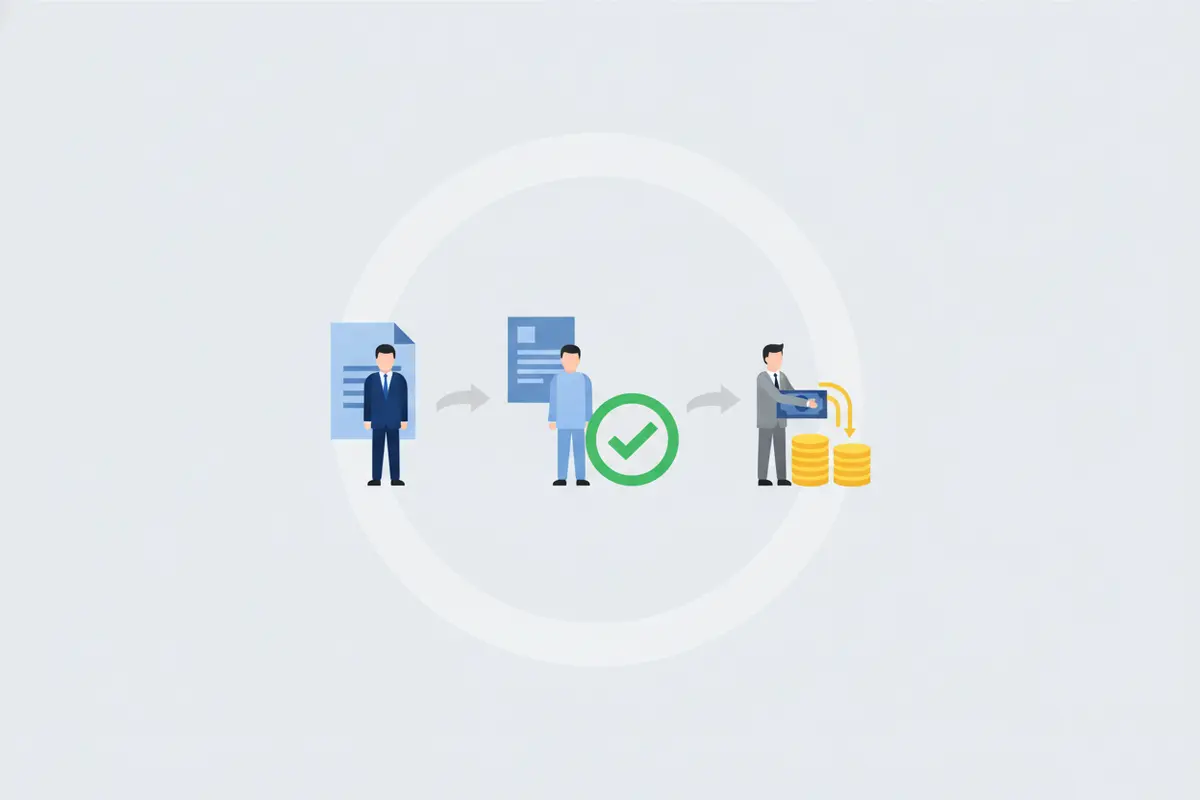
Before signing, identify one person responsible for informing the affected customer and reconciling the eventual payment. Confirm the approved notice language, remittance details and process for a payment sent to the old address. Clear procedures can reduce confusion for both accounts receivable staff and customers.
How does Revenue On Demand work?
Now’s process is designed around approved invoices. A business submits invoices or connects its accounting system, selects which customers and invoices to activate, then receives payment of the approved invoice amount minus a flat fee. Now states that payment is typically made within 24-48 hours after approval. Eligibility and actual timing depend on the submission and review process.
Now positions Revenue On Demand as neither a loan nor traditional factoring. Its model is selective, so a business can choose invoices rather than fund all receivables. It also describes a non-recourse approach for customer-pay risk, with important limits: the client remains liable in cases involving fraud or bad faith, as set out in the agreement. Review the actual contract rather than interpreting “non-recourse” as protection from every invoice problem.
Businesses evaluating this model can review how Revenue On Demand works, then compare it against their own cash timing and customer workflow. Read more about what Revenue On Demand means before deciding whether it fits the company’s needs.
An academic case study focused on strategies SME owners can use to access and obtain invoice factoring financing. It is useful context for understanding that accessing this type of financing involves deliberate preparation, although the study does not establish that one product is right for every business. Read the study on SME strategies for invoice factoring.
What preparation can make an application smoother?
Providers typically need to evaluate the business, invoice and customer. Requirements differ, so ask for the provider’s current checklist early. Organizing the following information can help your finance team answer questions efficiently:

- Business basics: Prepare legal entity details, ownership information and recent financial statements as requested.
- Receivables records: Gather an accounts receivable aging report, open invoices, customer names, terms and payment history.
- Invoice support: Keep contracts, purchase orders, time records, delivery confirmations or other evidence that the invoiced work was completed.
- Exceptions: Identify credit memos, disputes, offsets, customer concentration and any restrictions on assigning or directing payment for receivables.
- Use of funds: Explain the timing gap the funding would address and how much cash is needed for the relevant period.
Before submitting sensitive materials, understand how the provider handles data and who will review it. Confirm that the person responsible for billing and collections knows what changes if an invoice is approved.
What decision framework can your finance team use?
Use a short review that includes the finance lead, the person managing receivables and, when appropriate, legal and accounting advisers. The goal is a documented comparison that connects each offer to a specific business need.
- Define the problem: Name the invoices and cash obligations involved. Separate a timing gap from a collection problem or a structural cash deficit.
- Set the required amount and date: Estimate when funds are needed and how much must be available after fees or reserves.
- Normalize offers: Compare providers using matching invoice amounts, terms and assumed payment dates. Include on-time and late-payment scenarios.
- Trace the customer journey: Write down who sends the invoice, who communicates with the customer and where payment goes.
- Review downside cases: Ask how the agreement handles disputes, late payment, insolvency, fraud and early termination.
- Choose a pilot carefully: If terms allow, begin with a limited set of suitable invoices and check the workflow, reconciliation and actual cost before expanding.
Keep a copy of the comparison and the executed agreement. Revisit the decision if payment terms, customer mix, pricing or working-capital needs change. The best-fit arrangement is the one whose documented cost and responsibilities make sense for the company’s circumstances.
Talk with a Now specialist about your invoice needs
Frequently asked questions
Is B2B invoice financing a loan?
Sometimes the phrase includes receivables-backed loans, but it can also refer to factoring or other invoice-based arrangements. Read the contract to identify whether the product creates a debt obligation and how repayment works.
Does invoice financing require funding every invoice?
It depends on the provider and agreement. Some programs require broad or ongoing participation, while selective models allow a business to choose specific invoices. Check for minimum volume and exclusivity requirements.
Will customers know that an invoice is being financed?
That depends on the structure. Customers may receive new payment instructions or other notice. Ask for the exact process and customer communication in writing; do not assume an arrangement is non-notification.
What happens if a customer does not pay?
The answer depends on recourse terms and the reason for nonpayment. Review the agreement’s treatment of customer insolvency, disputes, fraud and breach of contract. A non-recourse label does not necessarily remove every client obligation.
How quickly can a business receive funds?
Timing varies with the provider, invoice approval and verification requirements. Now says payment on approved invoices is typically made within 24-48 hours after approval. Confirm timing and prerequisites for a specific invoice before planning around it.
B2B invoice financing is most useful to evaluate as a defined cash-timing choice: compare what the company receives, what it pays and how the arrangement affects customers and operations. With those details in hand, founders and CFOs can decide whether invoice-based funding belongs in their working-capital plan.