

Business invoice financing can help a media production company cover the time between paying crew and vendors and collecting an approved client invoice. A deposit helps, but the right decision depends on dated cash needs, invoice status, total cost and project margin—not the contract total alone.
Why can a production deposit leave a cash gap?
Production spending arrives in stages. A company may pay a location fee and equipment deposit before a shoot, pay crew as work happens, then cover editing and other post-production costs. The client may owe the next milestone only after review or delivery. A profitable project can therefore have a period when cash outflows precede receipts.
Consider a $100,000 project with a 30% deposit and a $70,000 final invoice due after delivery on net-30 terms. If $45,000 of costs fall due before delivery, the deposit leaves a $15,000 shortfall at that point. That is a timing gap, not proof that the project loses money. The calculation should still include payroll dates, taxes, vendor deposits, revision rounds and cash already committed to other jobs.
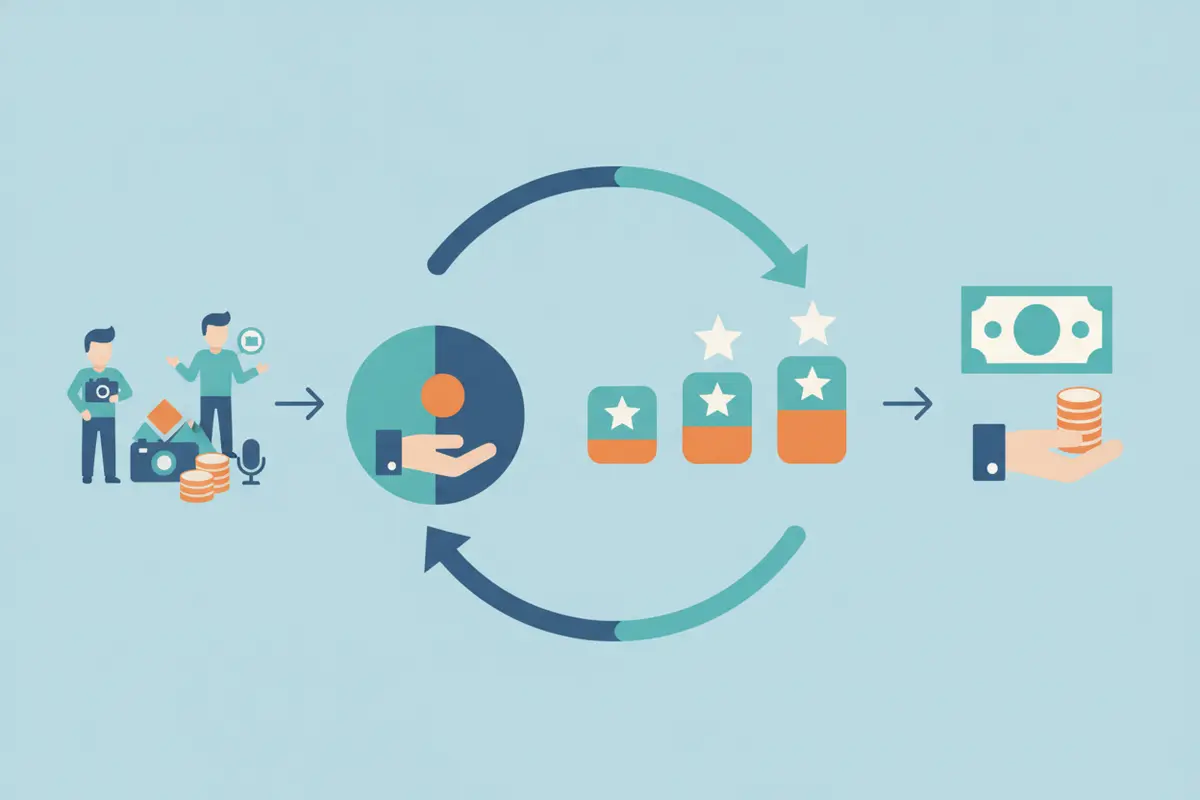
Map each project receipt and payment on a calendar. Use cautious dates when approval or client processing is uncertain. Keep the forecast separate from the signed project budget: a budget shows planned economics, while a cash calendar shows when money is expected to move. Research can offer context, but it cannot establish whether an individual invoice qualifies or predict when a particular client will pay.
How do you measure the amount and duration of the gap?
Start with the weekly cash position, not the contract value. Identify what cash is actually available for the project. Do not count funds reserved for taxes, payroll on another project or outstanding supplier balances. Then build a dated forecast with confirmed receipts and payments.
- Record reliable receipts. Include a deposit already received and milestone payments with clear conditions. Leave unsigned change orders and speculative work out of the base case.
- List outflows by due date. Separate committed costs from optional purchases. Include payroll, equipment rental, travel, location charges, post-production and vendor deposits.
- Check invoice readiness. Note whether work is complete and delivered, and whether the client requires acceptance, a purchase order, timesheet, delivery confirmation or portal submission.
- Find the lowest projected cash point. The largest shortfall before the next dependable receipt is the potential bridge amount. Add a sensible timing buffer, but do not borrow against costs that are not due.
- Estimate the bridge period. Count from the date funds are needed to the likely client payment date. Approval and processing may happen before the payment term begins.
Return to the $100,000 example. Suppose $20,000 of the $45,000 cost is due before filming and $25,000 before delivery. A $30,000 deposit covers the first costs and leaves $15,000 after all pre-delivery spending. If a separate accepted $20,000 milestone invoice is due before the final payment, the shortfall may be lower or shorter. The calendar reveals the actual sequence; the project budget alone does not.
Build at least two versions. In the expected case, use the client’s normal approval timing. In the cautious case, move approval and payment later and include any unavoidable costs that continue during the delay. If the second case creates a payroll problem or requires using money reserved for another job, the business needs a contingency before production begins.
Which options may fit the timing problem?
First consider whether the project terms can move closer to the spending curve. If they cannot, compare reserves, supplier terms, a credit facility and funding tied to a completed invoice. These options are not interchangeable. Some require a qualifying receivable, while others create a broader borrowing commitment.
| Option | When it may fit | What to verify |
|---|---|---|
| Adjust deposit or milestones | Before signing, or when the client will approve a contract change | Dates match major costs and acceptance triggers are clear |
| Use reserves | The gap is brief and operating cash remains adequate | Cash left after payroll, taxes and supplier commitments |
| Negotiate supplier terms | A vendor can shift a due date without disrupting production | Written terms, fees and effect on delivery |
| Business credit facility | Needs recur across multiple jobs or are not tied to one invoice | Interest, repayment schedule, collateral, guarantees and total cost |
| Funding against an approved invoice | Completed work has produced an invoice that meets provider requirements | Fee, availability, eligibility, recourse, reserves and customer communication |
A future milestone, estimate or unsigned change order is not the same as an approved invoice for completed work. If an invoice is disputed, conditional or missing required paperwork, do not assume funds will be available. Confirm the provider’s review requirements and timing in writing.
Now describes Revenue On Demand as a selective approach to approved B2B invoices. Read the Revenue On Demand overview, compare it with the guide to invoice factoring and review how the process works. These explain the model; check current eligibility and written terms for your situation.
How can you compare funding cost with project economics?
Compare the full cost in dollars with the project’s available margin and the consequence of waiting. Suppose a completed project has a $40,000 approved invoice on 30-day terms. At an illustrative 2.75% fee, the charge is $1,100 and the amount after that fee is $38,900, before any other applicable costs. This arithmetic is an example, not an offer or quote. The pricing page lists Now’s published fees and activation charge; verify current terms directly.
Ask what the quoted fee includes and whether there are reserves, additional charges, recourse, minimum volume or requirements to include other invoices. Find out what happens if the client pays late or short-pays. Then compare the amount with the likely impact of waiting, such as delayed vendor payments, disruption to a booked shoot or inability to start another contracted project. A fee should not be judged only against the invoice amount. The useful comparison is with the project margin and the cost and obligations of the alternatives.

Stress-test the choice. If client approval takes two extra weeks, can the business still meet payroll? If a change request is rejected, does the remaining margin cover the costs already incurred? If the client pays only part of an invoice while disputing a revision, which cash source covers the undisputed obligations? A simple expected-versus-delayed forecast can reveal whether a bridge solves a short timing issue or leaves a wider project risk unresolved.
What makes an invoice easier to evaluate?
Make the paperwork traceable from agreement through delivery. Assemble the signed statement of work, any required purchase order, invoice, delivery confirmation and written approval. Check that the amount matches the milestone and that the billing contact and submission channel are correct. The accounts receivable lifecycle guide offers a broader view of billing and collection steps.
- Use a distinct invoice number and the client’s correct legal name.
- Describe the delivered work or milestone in the same terms used in the contract.
- Include purchase-order references and supporting documents requested by the client.
- Confirm that the invoice reached the person or portal responsible for approval.
- Record a dispute or short-payment in writing and resolve it before relying on the full balance.
- Keep delivery records, approval messages and any change-order approvals together with the invoice.
These checks do not guarantee payment, but they can prevent avoidable processing delays. Record when each client actually pays. The stated net term and the real payment pattern may differ. A history of payment timing helps the producer set a more realistic receipt date on future forecasts.
An academic case study, Small and Medium-Size Enterprise Owner Strategies for Invoice Factoring, examines strategies SME owners use to access invoice factoring financing. It is a study of owner strategies, not proof that any particular invoice will qualify or that financing suits every project. Use your contract, client records and provider’s written requirements for a transaction decision.
How can the next production reduce cash pressure?
Build payment terms around the project’s spending curve. When substantial costs arise before filming, propose a deposit or pre-production milestone that reflects those commitments. Later payments can be tied to clear events such as shoot completion, first-cut delivery or final acceptance. Specific triggers help both sides know when an invoice can be submitted.
At proposal and contract stage, clarify who can approve work and invoices, what counts as delivery, how long the client has to review, and what supporting documents each invoice needs. Also agree how revisions, reshoots and scope changes will be authorized and billed. Define what happens if a shoot is postponed or client review runs late. For examples of staged billing in this field, see the media production payment schedule guide.
Invoice promptly after each agreed milestone. Review cash at least weekly while project costs are active. After the job closes, compare forecast dates with actual payment dates and note where the assumptions were wrong. For repeat clients, use that record in the next proposal. If deposits repeatedly fail to cover early commitments, revise the terms or rescope the work rather than treating the same shortfall as a surprise.
For businesses that also handle agency projects, Now’s marketing and creative agency information provides related context. Keep the signed agreement and the actual production calendar as the authority for each job.
What should you ask before choosing a route?
Before accepting an offer or changing a payment date, work through this checklist:
- Is the cash gap dated? Verify the amount and the earliest date funds are needed.
- Is the receivable ready? Confirm completed work, client acceptance and required paperwork.
- What is the net amount? Include every fee and activation charge, not just an advertised percentage.
- When will funds be available? Ask what starts the timing and whether setup or review adds time.
- Who manages the client relationship? Clarify who bills, follows up and handles disputes.
- What happens after a delay or short payment? Read the written agreement for late, disputed or partially paid invoices.
- Does the commitment extend beyond this invoice? Confirm whether volume, exclusivity or additional receivables are involved.
Use the net-30 terms guide to frame the payment period and the cash flow estimation guide to improve the forecast. If an invoice appears eligible and the terms fit the need, review the specifics with a provider. Do not assume every production invoice qualifies.
Frequently asked questions
Can a deposit remove the need for invoice funding?
It can if it arrives early and covers costs due before the next dependable receipt. If the deposit is smaller than the first spending wave, a remaining gap may call for a milestone change, reserves, supplier terms or another source.
Can an unfinished project invoice be funded?
Eligibility depends on provider requirements. An estimate or future milestone is not the same as an invoice for completed, accepted work. Confirm the criteria before including expected funds in a forecast.
Should a producer base the amount on the whole contract?
No. Start with the dated shortfall and costs that must be paid. Contract value may include amounts committed to crew, vendors, taxes and later project stages.
What if the client will not increase the deposit?
Ask whether smaller, more frequent milestones or a defined pre-production payment are possible. If terms cannot change, compare reserves, supplier terms, a credit facility and eligible invoice funding, including each option’s cost and obligations.
How should a producer handle an invoice dispute?
Document the issue, compare it with the contract and delivery records, and seek written clarification from the client. Do not assume the full amount will arrive on schedule or that a disputed balance meets a provider’s criteria.
Talk with Now about invoice timing
Forecast production spending against realistic client payment dates, then choose the least disruptive way to bridge any verified shortfall.