

A 2 percent discount looks small until you count the days you give up to earn it. On a B2B invoice, that choice is usually the difference between paying a reduced amount inside a short window and paying the full amount a few weeks later. The useful question is not whether the discount sounds generous. It is what those extra days of cash are worth to each side of the invoice.
2/10 net 30 means the buyer may deduct 2 percent when the invoice is paid in full within 10 days. If the buyer does not use the discount, the full amount is due by day 30. Skipping the discount keeps the extra 2 percent for about 20 more days, so the cost should be compared with the buyer’s real short-term funding options.
Talk with a Now specialist about covering an approved invoice while the written payment terms stay in place.
A worked example makes the dollars concrete. A $15,000 invoice becomes $14,700 when it is paid inside the discount window. It stays $15,000 when it is paid after that window but by the final due date. The 2 percent reduction on that invoice is $300. Sage describes the same 10-day discount. The subtraction is simple. The harder step is deciding whether the 20 days between those dates are worth $300.
What does 2/10 net 30 mean on an invoice?
2/10 net 30 is shorthand for an early-payment discount and a final payment deadline. The first number, 2, is the percent the buyer may deduct. The second number, 10, is the number of days the buyer has to pay in full and still take that discount. Net 30 is the outside deadline: if the discount is not taken, the full invoice amount is due within 30 days.
On a $10,000 invoice, the 10-day price is $9,800. After that window, the buyer generally owes the full $10,000 by day 30. The invoice date, the way the seller counts days and the date a payment is treated as received should all be written down. A notation on its own does not settle a dispute about whether day 10 fell on a Saturday.
The discount usually applies to the goods or services amount before shipping and taxes when the seller’s terms say so. Sage’s net 30 guide describes 2/10 net 30 as 2 percent off when the invoice is paid within 10 days of the invoice date. The first number is that percent, not a blank check against every line. Freight, sales tax and pass-through charges should be named as in or out of the discount base.
Plain net 30 has no stated early-payment discount. The full amount is simply due by the agreed 30-day date. For that broader definition, read what net 30 terms mean. This article stays with the discount notation and does not re-teach the general term.
The same pattern works at other rates. 1/10 net 30 is a 1 percent discount for payment within 10 days, with the full amount due in 30 days. Sellers sometimes write 2/15 net 30 or 5/10 net 30. Read the three parts the same way: discount percent, discount window, full-payment deadline. Then check the invoice and the contract before anyone reduces a payment.
How does the 10-day discount window work?
The window is a dated period, not a vibe. Take a $15,000 invoice dated January 1 with terms of 2/10 net 30. The buyer can deduct 2 percent only when the invoice is paid in full inside the 10-day window. The full balance is due by the net-30 deadline. Sage describes 2/10 net 30 as a 2 percent discount for payment within 10 days of the invoice date. The dated walk-through below uses that rule on a $15,000 invoice.
- Set the starting date. In this example the clock starts on January 1, the invoice date, unless the contract says the period begins at delivery or at approval. Name that event if your process depends on it. Do not leave the start date to whoever opens the email first.
- Calculate the discounted balance. Two percent of $15,000 is $300. Paid in full before January 11, the amount due is $14,700, which is $15,000 times 0.98. A partial payment inside the window does not automatically earn the discount on the whole invoice unless the written terms say it does.
- Apply the full amount after the window. Paid after the discount window and by January 31, the amount due is $15,000. January 31 is day 30 in this example. Being on time for the net deadline does not revive the discount.
- Write the weekend and holiday rule. If day 10 or day 30 lands on a Saturday, Sunday or holiday, say whether the deadline moves to the next business day or stays on the calendar date. An unstated assumption is how these discounts turn into short pays.
- Put the phrase in both places, then track it. Print “2/10 net 30” on the invoice and in the contract, with the starting-date rule beside it. After the invoice goes out, the due date, the payment status and the follow-up live in the accounts receivable lifecycle. A second date field for the discount deadline keeps the 10-day cut separate from the 30-day cut.
One more operational detail: decide what “paid” means. Cleared funds, a mailed check or a scheduled ACH are not the same event. If the discount requires cleared funds by day 10, say that. Buyers who initiate payment on day 10 and sellers who require receipt on day 10 will otherwise disagree about a $300 deduction.
What does it cost to skip the 2 percent discount?
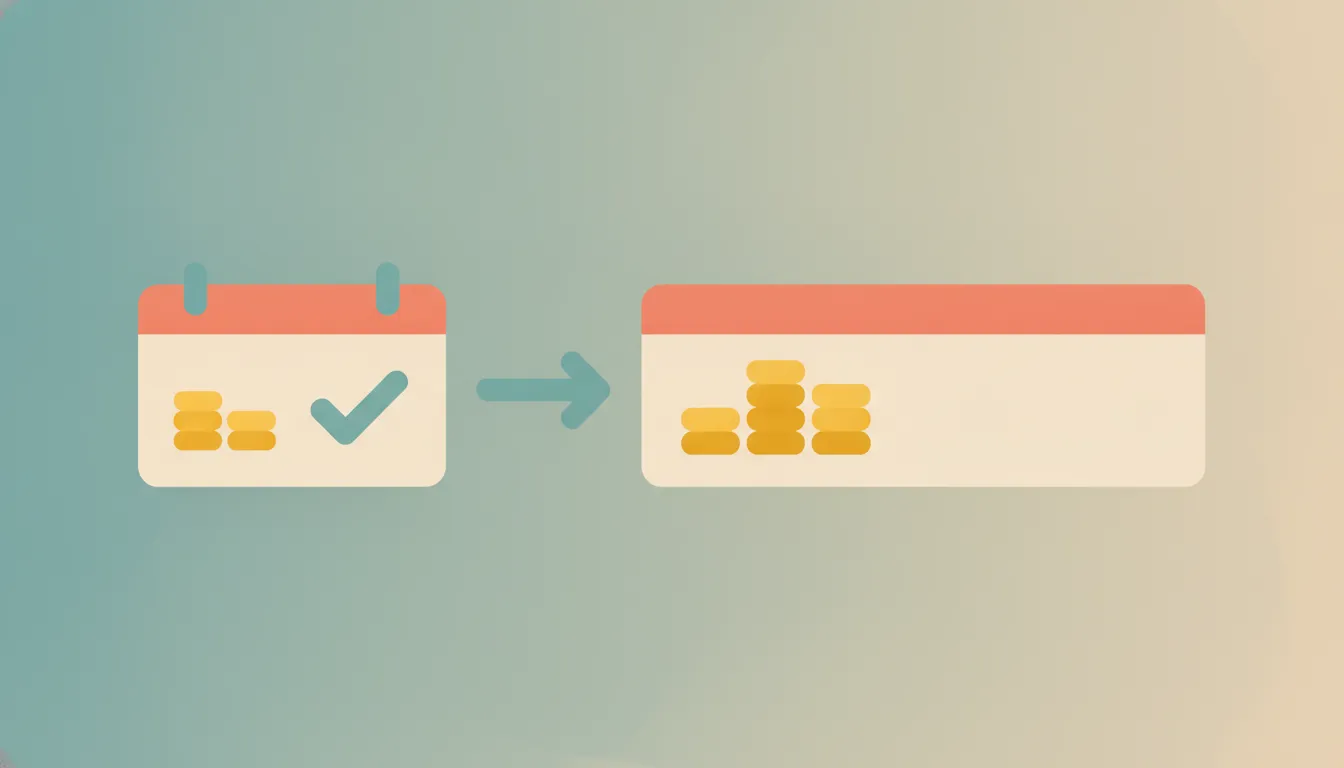
Skipping a 2/10 net 30 discount means paying the extra 2 percent for about 20 more days of cash. A buyer who pays by day 10 pays 98 percent of the invoice. A buyer who waits until day 30 pays 100 percent. Stretching that 20-day tradeoff across a year produces a comparison figure. It is not a loan rate a bank will quote and it is not interest printed on the invoice.
The standard approximation is (discount / (100 – discount)) times (365 / (net days – discount days)). For 2/10 net 30 that is (2 / 98) times (365 / 20), or about 37.24 percent. The same formula on a 360-day year is about 36.73 percent. Open Exam Prep’s accounts payable notes publish both figures and describe them as the annualized cost of the extra 20 days of credit.
| Choice | Cash paid | What you give up |
|---|---|---|
| Pay by day 10 and take the 2 percent discount. | $14,700. | Use of that cash for about 20 more days. |
| Pay the full invoice by day 30. | $15,000. | The $300 discount. |
| Approximate annualized cost of waiting. | About 37.24 percent on a 365-day year. | A comparison figure, not a stated invoice rate. |
The same structure at 1 percent is cheaper to skip and less rewarding to take. For 1/10 net 30, the same formula is (1 / 99) times (365 / 20), or about 18.43 percent. Sage uses 2/10 net 30 as the common early-payment example, and the 1 percent version is the same structure at half the discount. A buyer comparing a 2 percent offer with a 1 percent offer should not treat them as close. The annualized gap is roughly double.
A buyer can still skip 2 percent on purpose. Paying on day 10 is a poor trade if it would miss payroll, a tax deposit or a supplier who is about to stop shipping. Skipping also makes sense when a confirmed credit line, after fees and draw rules, costs less than the annualized discount. Use the real alternative, not the 37.24 percent figure alone.
For a seller, offering 2 percent is not automatically a gift that pays for itself. If gross margin is thin, giving up 2 percent on most invoices can cost more than the value of getting cash on day 10 instead of day 30. Run the discount against margin, the share of buyers who will actually pay early and the cost of chasing the ones who take the discount late.
When should a seller offer 2/10 net 30?
Offer 2/10 net 30 when the discount is likely to move the payment date and the margin can carry it. The offer fits customers who have paid inside 10 days before and who have the cash to do it again. If a buyer reliably pays on day 25 or day 30, a standing 2 percent discount often becomes a price cut that does not buy faster cash. In that case, keep the conversation on choosing net payment terms rather than adding a discount the account will not use. That guide owns the broader policy choice. This section only covers the discount offer.
A seller with a thin margin should be especially picky. If most buyers take 2 percent and still pay near day 10 only after a reminder, the seller has paid for a behavior the reminder produced. Limit the offer to accounts with a clean early-payment record, or use it on invoices where cash a few weeks sooner has a specific job, such as a materials buy or a payroll week.
Make the dates and the math unambiguous
Write the discount as a percent of the goods or services amount, not as a rounded courtesy. Under 2/10 net 30 the customer may deduct 2 percent when the invoice is paid in full within 10 days. Otherwise the full amount is due in 30 days. The accounting system should store a discount-due date separately from the net due date so a short pay can be tested against the right cutoff.
After day 10, the discount should not turn into an informal write-off because someone asked nicely or because the payment arrived 2 percent light. Apply the written terms, document any exception a manager actually approved and collect the remainder. If the account misses day 30 entirely, that is a different problem, covered in handling late payments.
When the terms stay net 30 and cash is still needed sooner
A discount offer and a funding choice are different decisions. If the written terms stay net 30 and the seller needs cash before the buyer pays, Revenue On Demand is a flat-fee option that leaves the customer’s terms in place. It is not a loan and it does not compound. The published net-30 fee is 2.75 percent, so a $100,000 net-30 invoice advances $97,250. There is a one-time $250 activation fee. Current figures are on the flat-fee pricing page. International invoices add a 1 percent surcharge, so the published net-30 fee on those invoices is 3.75 percent.
Do not offer 2/10 net 30 to every buyer because a funding option exists. Check payment history, margin and whether the team will enforce two deadlines. A discount that nobody administers becomes a standing deduction.
How should a buyer decide, and what if cash will not arrive in 10 days?
The buyer’s choice is the cost of using cash now versus the cost of keeping it for about 20 more days. Under 2/10 net 30, payment within 10 days earns 2 percent off. Waiting means the full invoice by day 30. The approximate annualized cost of giving up the discount is (2 / 98) times (365 / 20), or about 37.24 percent. That estimate, with the 360-day variant, is laid out in the same accounting reference. The seller is not charging 37.24 percent. The figure only prices the forgone discount.
Put that figure next to the buyer’s actual cash. If a confirmed line costs substantially less, after fees, taking the discount is usually the better trade. If paying on day 10 would miss payroll or a critical supplier, skip the discount and pay the full amount by day 30. A discount that creates a worse cash gap is not a savings.
The seller’s problem is the mirror image. Offering 2/10 does not make buyers take it, so many invoices will still sit until day 30. Cleaner invoices, a known approval path and a steady follow-up can shorten that wait without rewriting the terms. Those steps are covered in getting paid faster on B2B invoices. The wider timing problem, earning the revenue and then waiting to collect it, sits in business cash flow management.
A flat fee is not the same math as the discount
If the seller needs cash before day 30 and the buyer will keep the original terms, Revenue On Demand prices a different choice. The fee follows the written term length rather than how late the buyer eventually pays. The published $100,000 net-30 example advances $97,250. There is no monthly interest and no compounding. The one-time activation fee is $250. International invoices add 1 percent. Confirm the live table on published pricing before using a figure in a forecast.
The published pricing table steps the flat fee with the length of the written term. Fifteen days is 2.50 percent. Thirty days is 2.75 percent. Forty-five days is 3.75 percent. Sixty days is 5.25 percent. Seventy-five days is 6.25 percent. Ninety days is 7.50 percent. Use the term printed on the invoice, not the day the buyer happens to pay. Those percentages are the live table, not a conversion of the 2 percent early-payment discount.
A 2.75 percent flat fee on a 30-day invoice is not a 2 percent early-payment discount. The discount is the buyer’s reward for paying the seller inside 10 days. The flat fee is the seller’s cost for getting paid on an approved invoice while the buyer still owes the original amount on the original date. Mixing the two in one spreadsheet will overstate the savings or the cost. How invoice funding works walks the seller-side steps, including the fact that the buyer keeps the written terms.
Use the discount when the other party will actually pay inside the window and the margin can afford 2 percent. Use a separate cash-flow tool when the terms need to stay net 30 and the operating calendar cannot wait. Neither choice replaces a clear invoice, a defined start date and a second deadline that someone is willing to enforce.
Talk with a Now specialist if an approved invoice needs to fund operations before the written due date.
Frequently asked questions
What does 2/10 net 30 mean?
The buyer may deduct 2 percent when the invoice is paid in full within 10 days. If the buyer does not take the discount, the full amount is due within 30 days. The first number is the discount percent, the second is the discount window and net 30 is the final deadline.
How do you calculate the 2 percent discount?
Multiply the eligible invoice amount by 0.02, then subtract. On a $15,000 invoice the discount is $300, so the 10-day price is $14,700. Sage describes this same 2 percent, 10-day discount. Confirm whether freight and tax are inside the discount base before you send the short payment.
How much is due on a $1,000 invoice?
Paid in full within 10 days, a $1,000 invoice at 2 percent is $980. Paid after the discount window and by day 30, it is $1,000. The $20 gap is the whole decision on an invoice that size.
When is payment due?
The discounted amount is due within 10 days of the start date in the written terms, usually the invoice date. The full balance is due within 30 days if the discount is skipped. If day 10 or day 30 falls on a weekend or holiday, follow the contract rather than a habit.
What if you miss the 10-day window?
The 2 percent deduction is generally gone and the full balance is due by day 30. Paying after day 30 can trigger whatever late-payment terms the contract already states. Ask before the deadline if the start date itself is unclear. Do not take the discount late and wait to see if anyone notices.
What does it cost to skip the discount?
You pay 2 percent more for about 20 extra days of cash. A common annualized estimate is (2 / 98) times (365 / 20), or about 37.24 percent. A 360-day year gives about 36.73 percent. Both are comparison estimates, not an added fee on the invoice. The calculation source states the assumptions.